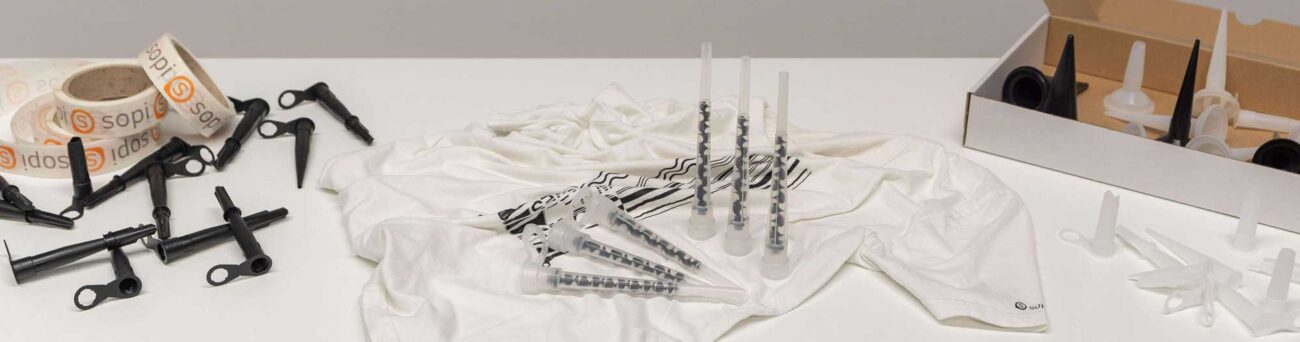
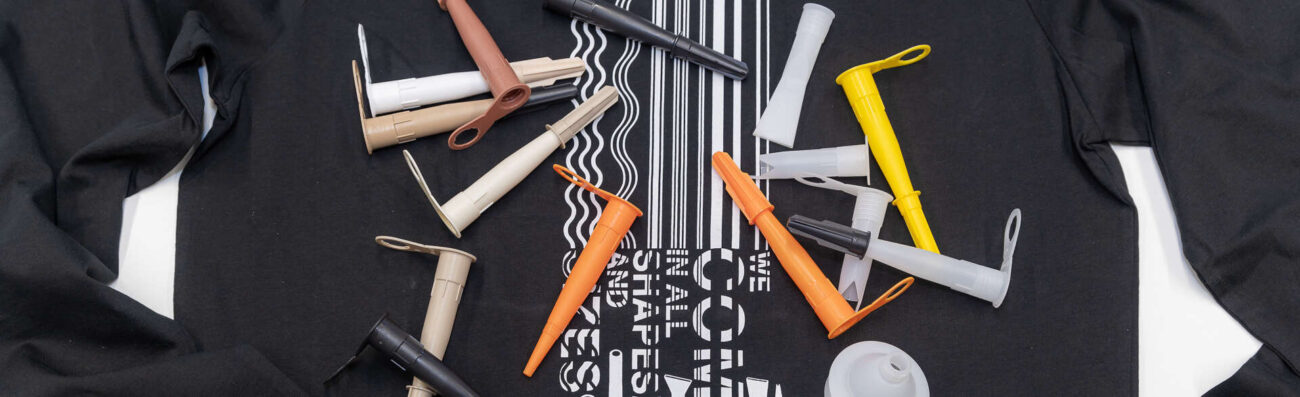
Silicone sealant nozzles require deliberate selection to create a steady, uniform flow. For optimal performance, the tip should accommodate material viscosity, match the joint width, and have the correct depth. Every dimension, surface, and connection in its design determines the accuracy of the application. Correct selection ensures proper alignment, hygiene, and professional results, while reducing waste. In high-volume operations, these factors directly affect profitability, repeatability, and speed.
When selecting a sealant nozzle, the material choice is equally critical. It influences wear resistance, chemical compatibility, dimensional accuracy, mechanical strength, cleanliness, and thermal stability. A nozzle for silicone gun made from chemically resistant, dimensionally stable, and durable material maintains smooth internal surfaces and precise geometry. This ensures predictable flow and reliable performance across all applications.
Improving Adhesion and Finish with the Right Sealant Nozzle
Silicone sealant nozzles allow you to press the sealant firmly against both sides of the joint while maintaining control. Proper sizing is essential: adhesion begins with contact between the substrate and the sealant. The material must apply evenly, displace air, and spread across the bonding area. If the tip is too small, air pockets may form; if too large, excess fluid can flood the joint. Careful tip selection ensures that the sealant bonds effectively, reducing the risk of weak points or gaps in the joint.
Material flow is another important consideration, as viscosity varies widely. Higher-viscosity materials require greater pressure to flow, so a narrow tip may increase resistance and cause pulsing, which disrupts bead uniformity. A correctly selected nozzle for silicone gun enhances both bond strength and appearance, ensuring a professional finish. Optimizing flow also minimizes waste and maintains a consistent bead, even during longer or high-volume applications.
Nozzle for Silicone Gun Improves Accuracy in Large-Scale Industrial Applications
A sealant nozzle influences many measurable factors that govern accurate application in large-scale industrial tasks, including diameter uniformity, filling density, length precision, weight consistency, and structural stability. When engineered correctly, the tips produce steady and predictable output. Stable flow prevents interruptions that cause over- or under-filling, while proper alignment reduces tearing or stretching. The internal geometry directs fluid movement, maintaining laminar flow for smooth application without turbulence, air pockets, or inconsistent density.
The design of silicone sealant nozzles directly affects precision. They are often made from dimensionally stable materials like HDPE. High-quality polymers ensure the tip retains its exact internal diameter, as even small variations can alter flow rate and portion accuracy. Wear-resistant materials support long-term precision, ensuring that sealants, adhesives, and other liquids maintain a consistent internal profile over time. This consistency helps reduce waste and ensures each application meets exacting quality standards, even in demanding or high-volume operations.
Material Choice in Nozzles Is Incredibly Important
Silicone sealant nozzles must be compatible with a wide range of sealants, solvents, adhesives, resins, coatings, oils, inks, and other reactive chemicals. Material selection determines wear resistance, dimensional stability, chemical compatibility, and long-term reliability. It directly impacts product quality and operational cost. Chemically incompatible materials can soften or corrode, causing dimensional changes. Stable materials maintain accurate geometry under pressure, preserving bore diameter and tip shape.
Wear resistance extends tip service life, reducing maintenance frequency and production interruptions. Thermal stability also plays a key role, ensuring consistent flow characteristics under varying operating temperatures. Together, these properties help maintain uniform application, prevent inconsistencies in bead formation, and support reliable performance throughout long production runs, even under demanding or high-volume conditions.
Dispensing Sealant Nozzle and Its Engineering Precision at the Point of Delivery
Nozzle for silicone gun acts as the interface between containment and controlled release. It governs droplet size, flow rate, placement accuracy, and safety. Its role extends beyond fluid release, shaping flow into a defined geometry, preventing leakage, maintaining consistent volumetric or mass flow under varying conditions, and ensuring safety. As liquid passes through, the tip converts pressure energy into kinetic energy, accelerating fluid through a constriction. Tip length influences flow conditioning, internal stability, pressure drop, and bead formation.
Because production processes differ, companies often require personalized designs. Well-engineered silicone sealant nozzles optimize workflow, reduce waste, and ensure long-term cost efficiency. Customization allows each tip to accommodate specific material properties, application speeds, and joint geometries, ensuring consistent performance across every operation. This tailored approach also helps minimize errors, reduces the need for rework, and supports higher productivity while maintaining quality standards.

Preventing Clogging in a Nozzle for Silicone Gun
A sealant nozzle is predictable and arises from identifiable mechanisms. It can appear as complete blockage, reduced flow rate, erratic droplet formation, asymmetric patterns, or upstream pressure spikes. Common causes include particulate contamination, drying at the orifice, chemical reactions, or air entrapment. Prevention relies on surface engineering, operational discipline, temperature control, fluid quality, and environmental stability.
Choosing the right silicone sealant nozzles ensures smoother application, less waste, and a professional finish. By understanding types and materials, users achieve precise results whether sealing, bonding, or repairing. Investing in a quality nozzle and proper maintenance improves efficiency and maximizes performance from every cartridge. Ultimately, the correct choice enhances consistency, reduces material loss, and ensures every project meets the highest standards of quality and reliability.